
Sensory Lab · Coffee Science
Coffee Is Called Coffee for a Reason
A green coffee bean tastes almost nothing like coffee. Cut one open before it’s been near a roaster and the smell is grassy, vegetal, faintly like raw grain — nothing like the aroma that fills a kitchen once beans have gone through a roasting drum. Every flavor associated with coffee — chocolate, caramel, toasted nut, dark fruit — is created during roasting. None of it exists in the green bean waiting to be released. It’s manufactured, on the spot, by chemistry with a name and a discoverer.
Somewhere between that green bean and the cup, a lot of coffee stops tasting like any of this and starts tasting like the roasting process itself — smoke, char, a bitterness that sits on the tongue like something scraped off a pan. People have been drinking that flavor for so long that many now describe it as what coffee is supposed to taste like. It isn’t. It’s what an over-roasted bean tastes like, and there’s a reason the industry keeps producing it anyway.
The Reaction With a Name
In 1912, a French chemist named Louis-Camille Maillard described a reaction between reducing sugars and amino acids that occurs under heat, producing brown pigments and a wide range of new flavor compounds. The reaction that bears his name isn’t unique to coffee. It’s the same chemistry responsible for the crust on bread and the sear on a steak — but in coffee, it becomes the primary architect of flavor, operating on a bean that would otherwise taste like little more than boiled grass.
Inside a roasting drum, the Maillard reaction becomes significant starting around 140°C, and proceeds rapidly through roughly 165°C. As beans lose the last of their internal moisture and temperatures climb, hundreds of amino acids and reducing sugars, present naturally in the green bean, begin reacting — first forming an unstable intermediate molecule that rearranges, in a step known as the Amadori rearrangement, before splitting into one of three paths: further dehydration toward caramel-type compounds, breakdown into smaller aromatic molecules, or renewed reaction with more amino acids. All three paths eventually converge on melanoidins, the dark brown compounds responsible for much of a roasted coffee’s color and for a portion of its roasted, malty, bready character. Melanoidins also help stabilize the foam known as crema.
Where Caramelization Comes In
At higher temperatures, generally above 160°C, a second, related reaction begins: caramelization, the direct breakdown of sugars under heat, without any amino acids required. Caramelization contributes the sweeter, more toffee- and vanilla-adjacent notes found in many roasted coffees, distinct from the more complex, savory, roasted character the Maillard reaction produces on its own.
The two reactions overlap in temperature range and happen simultaneously inside the same bean, which is part of why they’re so often confused, even by people describing coffee professionally. But they’re mechanically distinct: one requires amino acids and protein, the other doesn’t; one produces a wider range of aromatic complexity, the other concentrates more narrowly on sweetness and color.
What a Roaster Is Actually Controlling
An estimated seventy percent of a coffee’s aromatic complexity originates from Maillard reactions occurring during this specific window. A roaster’s real job, at the level that actually matters for flavor, is managing how fast a bean moves through this temperature range, not simply hitting a final color or "roast level," but controlling the rate at which the bean gets there.
Move through the Maillard window quickly, and the resulting cup tends toward brighter acidity and more pronounced sweetness — flavors associated with a faster, more aggressive roast profile. Move through it more slowly, and the cup rounds out: acidity softens, sweetness becomes less sharp and more integrated, body increases. Neither approach is objectively correct. They’re different decisions about which part of a bean’s potential to bring forward, made in real time, one degree at a time, by someone watching color, listening for the first crack, and adjusting heat accordingly throughout.
Why This Isn’t Really About "Dark" or "Light"
The common consumer shorthand — light roast, medium roast, dark roast — describes only how far past this chemistry a bean was allowed to travel, and for how long. It says almost nothing about how carefully the Maillard window itself was managed on the way there. A dark roast that moved through 140 to 165°C too quickly can taste flatter and more one-dimensional than a medium roast that moved through the same range with more control, even though the dark roast technically finished at a higher final temperature.
What a Very Dark Roast Is Actually Doing
There’s a reason so much commercial coffee is roasted well past the point where Maillard and caramelization have finished their work, into the range where the bean itself begins to carbonize. Heavy roasting is forgiving. It flattens the differences between a carefully sorted lot and an inconsistent one, because the flavor of char is loud enough to sit on top of almost anything underneath it — including the taste of a bean with a defect, an uneven ferment, or a size inconsistency that a lighter roast would have exposed. A roast that tastes mostly of smoke and bitterness isn’t necessarily a stylistic choice. It’s frequently a way of not having to ask what the green coffee underneath actually tasted like.
This is worth treating the same way an over-baked loaf of bread or a burnt piece of toast is treated: as a defect, not a variation. Nobody scrapes the black off a piece of toast and calls it a bolder flavor. A coffee bean roasted until it’s uniformly near-black, tasting of ash and cardboard, has undergone the same failure — carried past the point where the bean’s own character was still legible, into the point where only the burning is.
What Happens After the Roast, Not Just During It
The roast itself is only part of the discipline. What happens before and after it matters just as much — starting with something most drinkers never think to ask: whether every bean in the drum was actually the same size to begin with.
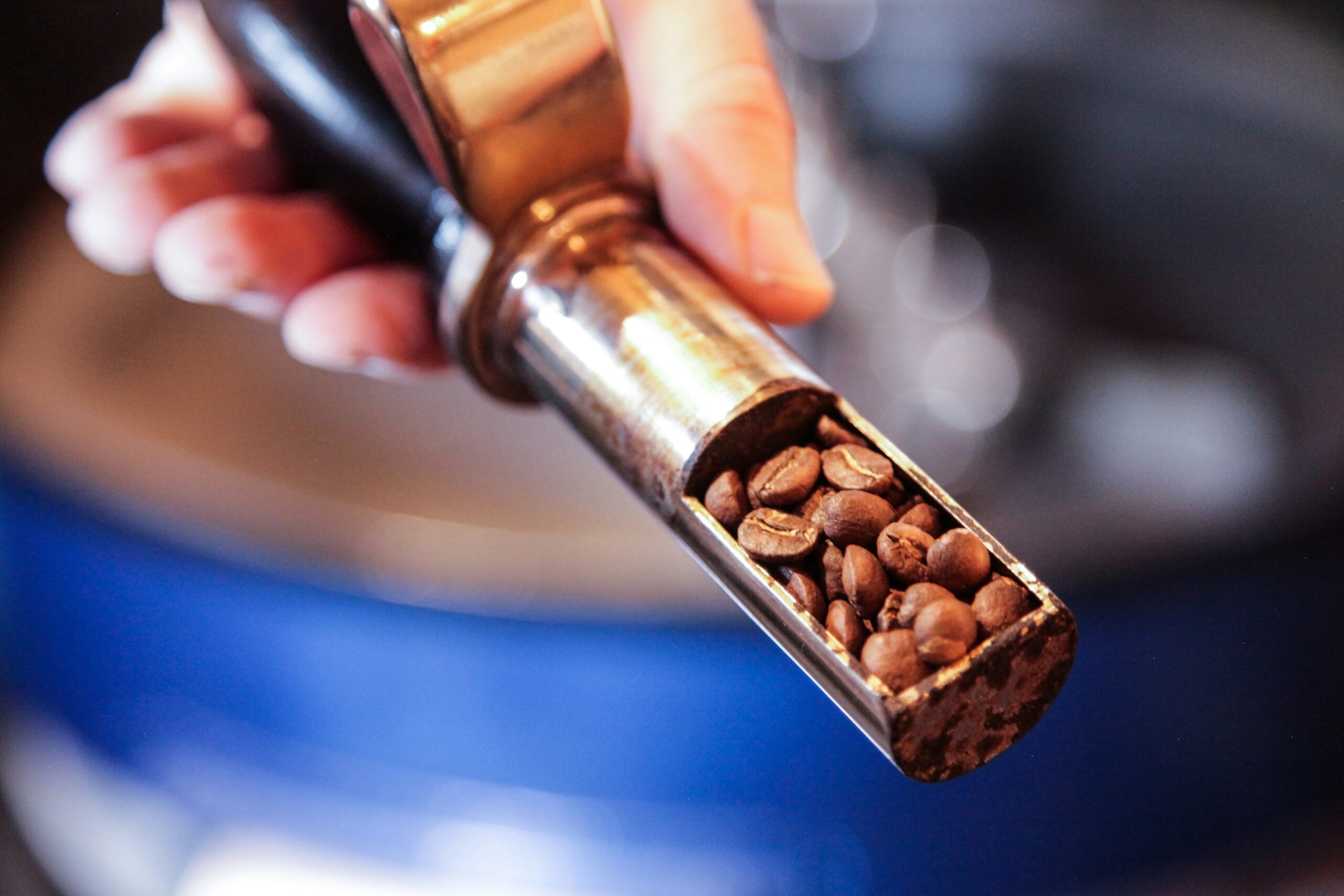
Bean size changes how fast heat moves through it. A smaller bean has less mass to heat through and reaches the same internal temperature faster than a larger one sitting in the same drum at the same time — which means a batch mixing two sizes doesn’t roast evenly no matter how carefully the roaster watches it. The smaller beans finish first and start scorching while the larger ones are still under-developed, or the larger ones are pushed to full development while the smaller ones have already burned. Ritual roasts by screen size for this reason: a batch of screen-18 beans and a batch of a smaller screen size each get their own calibrated curve, timed to that specific size, even when the two eventually go into the same bag afterward. They are never roasted together.
After roasting, the checking continues: confirming beans came out the color they were supposed to, free of the lighter-colored "quakers" that never develop properly and taste hollow in the cup; watching for visible surface oil, which signals a roast pushed too far or too fast; sorting again for color and size uniformity. None of this is visible on packaging. It shows up as beans that look the same as each other, straight from the bag to the grinder, because they were checked twice to make sure they would.
That same sorting is also why Ritual’s ground and whole-bean formats aren’t simply the same coffee in two containers. The smaller beans within a lot — slightly more flavorful in the cup, by most tasters' account, though less impressive to look at — go into the ground format, where appearance was never going to matter. The larger, more uniform beans, screen 18 and looking the part, go into the whole-bean bags, where a buyer opens a bag and finds beans close to identical in size and color, all the way to the bottom. Neither format is the compromise. They’re two different, deliberate answers to what a specific format is actually for — one where the bean’s own visible consistency is part of what’s being sold, and one where it never needed to be.
Ritual’s roast curves are built to land between a medium profile and what’s technically called an upper-medium profile — past the point where a coffee still tastes sharply of raw origin character, but well before the point where char starts to dominate the cup. It’s a deliberate middle: enough development to round out acidity and bring forward sweetness, not so much that the roast itself becomes the flavor.
Coffee Is Supposed to Taste Like Coffee
Somewhere along the way, a lot of drinkers were trained to expect coffee to taste black — meaning bitter, scorched, roughly interchangeable from one dark bag to the next. That expectation didn’t come from the bean. It came from a roasting choice made upstream, repeated often enough that it started to feel like a baseline rather than a defect. A coffee that still tastes like fruit, like brown sugar, like the specific place it grew — rather than like the drum it passed through — isn’t a lighter or gentler version of "real" coffee. It’s closer to what the word was describing before roasting was used to hide what was underneath it.
Sources
Louis-Camille Maillard, original description of the Maillard reaction, 1912, as referenced in Coffee Sapiens, "Maillard Reaction vs Caramelization: The Chemistry of Roasting Revealed Step by Step," June 2026.
Illy, E. and Navarini, L., "Issues in Espresso Extraction Today," 2011, cited via Fellow Products, "The Maillard Reaction – The Reason Your Coffee Tastes Like Coffee."
Ally Open, "Common Chemical Reactions in Coffee Roasting."
Headcount Coffee, "The Maillard Reaction in Coffee Roasting: The Chemistry Behind Your Cup," November 2025.
You deserve a better coffee.
Shop the coffeesTaste what a verified score means
100% Colombian single origin. Cupping Score 84 to 87, scored by certified Q Graders. Roast date on every bag.
Shop on Amazon