
Sensory Lab · Coffee Science
What Actually Keeps Coffee Fresh After You Open the Bag
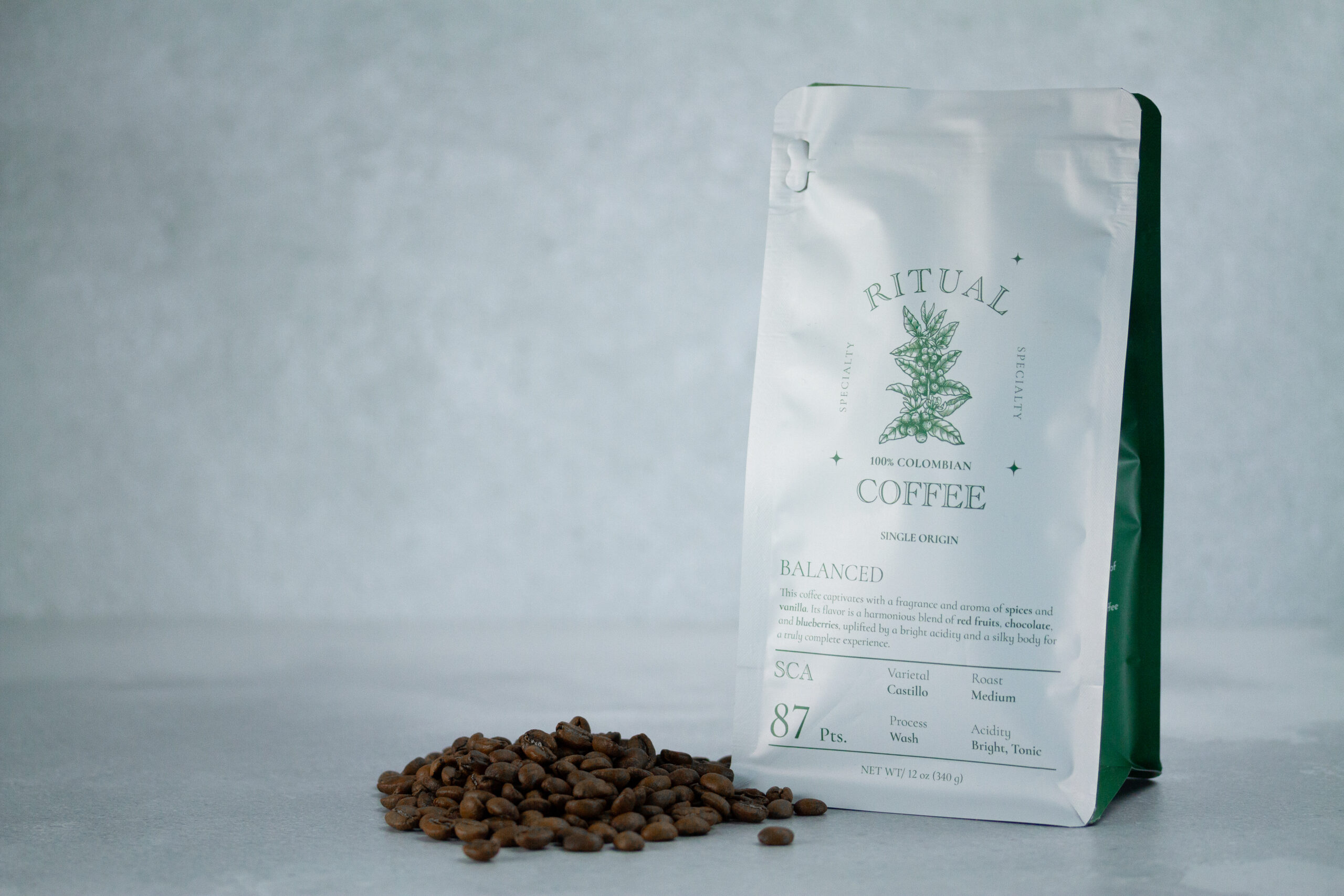
The bag arrives sealed, usually with a small one-way valve near the top — a piece of packaging most people never think about, which exists for one reason: it lets the carbon dioxide released by freshly roasted beans escape without letting oxygen back in. As long as that seal holds, the coffee inside is protected from the thing that ages it fastest.
Then the bag gets opened, and the protection ends.
The Study Nobody Reads Before Buying a Canister
In 2022, a study published in the journal Food Chemistry: X compared four common ways people store coffee after opening the original bag: transferring the beans into a separate airtight canister, resealing the original bag with tape, closing it with a clip, or using a bag with a built-in screw cap. Researchers tracked the coffee’s aroma over time using gas chromatography–mass spectrometry, watching for the specific chemical signatures known to indicate staling — in particular, the ratio between two compounds, 2-butanone and 2-methylfuran, which the study identified as a reliable freshness index for this kind of comparison.
The result cuts against a common assumption. The best-performing method wasn’t the canister — it was the original bag, resealed with its own built-in screw cap. Taping the bag shut, clipping it closed, or transferring the beans into a separate container all resulted in a faster loss of freshness, tracking closely with how much oxygen and carbon dioxide each method let in or let escape. The dedicated canister many people buy specifically to solve this problem didn’t outperform a well-designed bag doing the job it was built for.
Why the Specific Container Matters Less Than the Habit
Oxygen is the variable that matters most, and every method of resealing coffee is really just a different way of managing how much air gets trapped inside with it, and how much fresh air gets let back in every time the bag or container is opened again. Each time a bag is opened to scoop out a dose, a small volume of room air rushes in, carrying oxygen that will spend the time between now and the next opening slowly working on whatever aromatic compounds remain from the roast.
Headspace compounds this problem. A half-empty bag has more room for trapped air than a nearly full one, which means the same bag becomes progressively less protective as it empties — not because the bag changed, but because the ratio of coffee to trapped air shifted against it with every use.
Temperature, light, and moisture matter too, though generally less than oxygen does. Coffee is hygroscopic — it absorbs ambient moisture readily — and heat accelerates every chemical reaction already in progress since the moment of roasting. A bag stored above a dishwasher, near a stove, or in direct sun ages faster than the identical bag stored in a cool, dark cupboard, independent of how well it happens to be sealed. Grinding compounds all of this further: ground coffee exposes dramatically more surface area to the same volume of air than whole beans do, which is why pre-ground coffee loses its peak aroma within hours rather than weeks, and why grinding immediately before brewing does more for freshness than almost any storage method can.
What This Means in Practice
For coffee that will be finished within two to three weeks — which describes most home consumption between purchases — the simplest approach is also the most effective one: keep it in whatever airtight seal it came with, minimize how often and how long it’s left open, and store it somewhere cool, dark, and away from moisture. No specialty equipment required, and — per the 2022 research above — no dedicated canister required either, if the original packaging already does the job.
For coffee bought in larger quantities than can be used quickly, portioning matters more than the container. Dividing beans into smaller sealed portions and freezing what won’t be used within a few weeks slows both oxidation and the ongoing loss of aromatic compounds substantially — but only if each portion is opened once, used up, and not returned to the freezer half-used. Repeated freezing and thawing introduces condensation, and condensation on roasted coffee causes exactly the kind of moisture damage the freezer was meant to prevent in the first place.
None of this is about extending coffee’s life indefinitely. Roasted coffee has a real, finite window regardless of how carefully it’s stored. The question worth asking isn’t how to stop that clock. It’s how to avoid running it faster than necessary — the same question a bag’s own valve and seal are answering before a buyer ever opens it. Ritual’s valve and bag specification was tested against exactly this kind of oxygen-and-headspace pressure before it went into use, not assumed to work because it looked the part.
Sources
"Effects of different coffee storage methods on coffee freshness after opening of packages," Food Chemistry: X, 2022. sciencedirect.com / researchgate.net
Headcount Coffee, "How Environmental Storage Conditions Change Coffee Flavor Over Time," November 2025.
Barista Exchange, "How to Store Fresh Roasted Coffee Beans: The Definitive Science-Based Guide."
Brew Life Company, "How to Store Coffee Properly: Let’s Settle This," 2026.
Achilles Coffee Roasters, "Coffee Storage 101: How to Keep Beans Fresh After Opening the Bag," October 2025.
You deserve a better coffee.
Shop the coffeesTaste what a verified score means
100% Colombian single origin. Cupping Score 84 to 87, scored by certified Q Graders. Roast date on every bag.
Shop on Amazon