
Sensory Lab · Brew Guides
The Grinder Question: Why Every Cup Starts with the Grind
Buy a bag of exceptional coffee, weigh it precisely, heat the water to exactly the right temperature, time the pour to the second — and then run it through a blade grinder for eight seconds, and most of that precision evaporates before the water ever touches the grounds. Grind size is the variable most home setups get wrong, and it’s the one most likely to undo everything done correctly around it.
Two Different Machines, Doing Two Different Things
A blade grinder is, mechanically, a small blender: a spinning blade chops beans into fragments of wildly inconsistent size, the way a knife hacking at something produces some large pieces and some fine dust in the same motion. The only control a blade grinder offers is time — grind longer, and the average particle gets smaller — but "longer" doesn’t produce uniformity. It just shifts the entire chaotic distribution toward finer, while still leaving both extremes present in the same batch of grounds.
A burr grinder works on an entirely different principle: two abrasive surfaces, set at a precise, adjustable distance apart, crush beans as they’re pulled through the gap between them. The size of that gap, not elapsed time, determines particle size, which is why a burr grinder can hit and repeat the same setting reliably, brew after brew, in a way a blade grinder structurally cannot. Within burr grinders, two burr geometries produce slightly different results: flat burrs, preferred by most competition-level baristas for espresso precision, and conical burrs, which run quieter and cooler but produce marginally less uniform particles.
Why Consistency Is the Actual Point
Coffee extraction happens in a predictable sequence: acids dissolve first, then sugars, then the bitter compounds that come last. A properly extracted cup captures enough of the early and middle compounds without pulling too much from that final, bitter stage. The problem with inconsistent particle size is that fine and coarse particles don’t extract on the same timeline in the same cup. Fine particles finish extracting quickly and start pulling bitter compounds while coarser particles are still under-extracted, tasting sour and thin. Both effects happen simultaneously, in the same brew — the specific, diagnostic signature of a blade-ground cup: sour and bitter at once, with little in the balanced middle.
Uniform particle size, by contrast, means the entire bed of grounds moves through that acid-sugar-bitter sequence together, arriving at a similar point of extraction at roughly the same time. Research comparing extraction efficiency has found consistency gains on the order of 20 to 30 percent when particle size is controlled, with the improvement most visible in methods especially sensitive to grind — espresso and pour-over in particular, where the margin for error is narrowest.

Matching Grind to Method
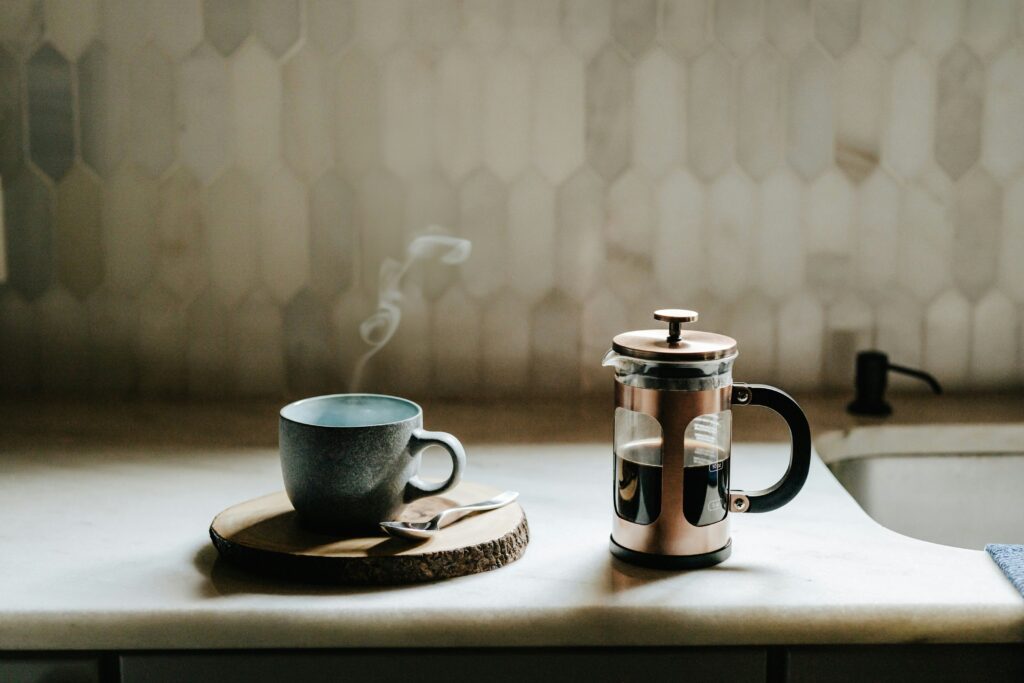
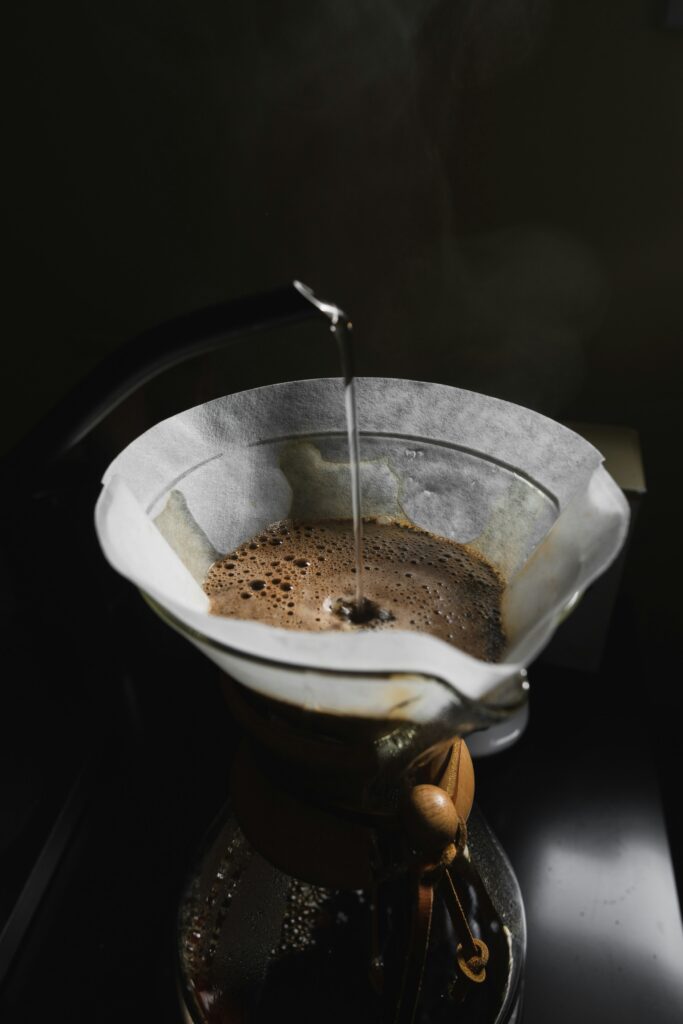
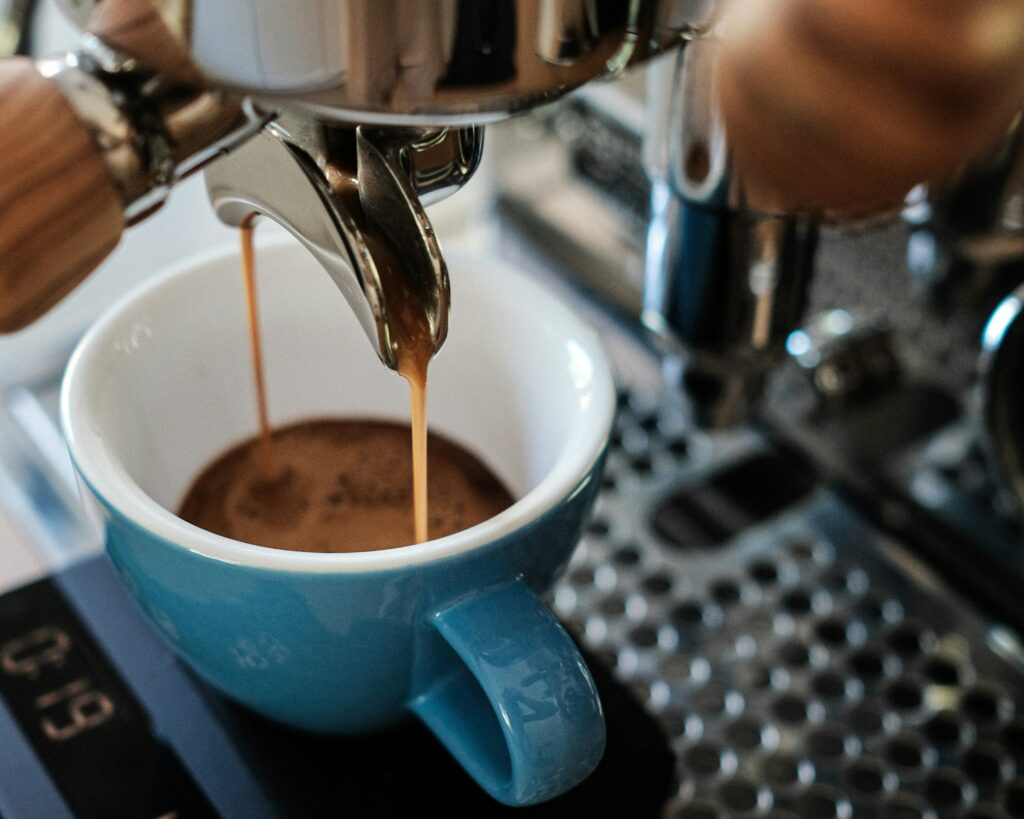
Different brewing methods need different particle sizes because they expose grounds to water for very different lengths of time. Espresso — water in contact with grounds for roughly twenty-five to thirty seconds, under pressure — needs a fine grind, close to table salt, to create enough resistance for proper extraction in that short window. Pour-over methods, with several minutes of contact time, need a medium grind, closer to coarse sand. French press, which steeps grounds in full contact with water for four minutes or more, needs a distinctly coarse grind, closer to breadcrumbs, both to avoid over-extraction and to prevent fine particles from slipping through the mesh filter into the finished cup.
A burr grinder’s core value is the ability to move reliably between these settings, often with a single dial or a numbered adjustment ring. A blade grinder, offering only "shorter" or "longer," cannot reliably distinguish between "fine enough for espresso" and "coarse enough for French press." It can only approximate a point somewhere in the middle, inconsistently, every time it’s used.
A Reference Worth Keeping Near the Grinder
Grind size · Texture reference · Coffee-to-water ratio · Contact time
Espresso
Very fine · Table salt · 1:2 (18g in / 36g out, roughly) · 25–30 seconds
Moka Pot
Fine to medium-fine · Fine sand · 1:7 to 1:10 · 4–5 minutes
Pour-Over (V60, Chemex)
Medium · Coarse sand · 1:15 to 1:17 · 2.5–4 minutes
Drip Machine
Medium · Coarse sand · 1:16 to 1:18 · 4–6 minutes
AeroPress
Medium-fine to medium · Between sand and table salt · 1:12 to 1:16 · 1–2 minutes
French Press
Coarse · Breadcrumbs · 1:15 to 1:17 · 4 minutes
Cold Brew
Coarse to extra-coarse · Breadcrumbs to peppercorns · 1:8 (concentrate, diluted to taste after) · 12–24 hours
These ranges are starting points, not fixed rules — bean density, roast level, and personal taste all shift them slightly. But they’re a more useful reference taped inside a cabinet than trusted to memory, and every method on this list fails in a specific, predictable way when the grind is wrong for it: espresso ground too coarse runs through in seconds and tastes sour; French press ground too fine turns muddy and clogs the plunger. The table exists to prevent that specific, avoidable failure, not to replace judgment once the basics are dialed in.
What This Actually Costs
Burr grinders exist across a wide range of investment. A manual burr grinder — hand-cranked, no motor — sits at the low end of that range and still produces genuinely uniform grinds despite the modest price. Electric burr grinders capable of covering the full range from espresso to French press tend to start meaningfully higher, with grinders built specifically for serious espresso work climbing well beyond that. None of these figures are fixed, since prices shift with the market — but the gap between "a burr grinder that solves the consistency problem" and "a blade grinder that structurally cannot" is not primarily a gap in price. It’s a gap in what the machine is mechanically capable of doing in the first place.
The Part That’s Actually a Ritual
Grinding immediately before brewing isn’t only about avoiding staleness, though that matters too — ground coffee’s increased surface area accelerates the same oxidation and aroma loss that affects whole beans, just considerably faster. It’s also the last controllable step before the water goes in: the moment where a bag of good beans becomes a specific cup, ground to a specific size, for a specific method, on a specific morning. Skipping it, whether by buying pre-ground coffee or by grinding once for the whole week, doesn’t just cost freshness. It skips the one variable in the entire process a home brewer has the most direct control over.
Which format to buy comes down to how much of that control actually gets used. A whole-bean bag hands the decision to the buyer, method by method, using a grinder and the table above. Ritual’s ground format is milled to a single, deliberate point on that spectrum: a medium to medium-fine grind. It is not made for French press, which wants something distinctly coarser. The honest version of this choice is simple: buy whole bean for control over every method on the table above, or buy ground for the one or two methods that cover most mornings, calibrated correctly for those and nothing else.
Sources
Clive Coffee, "What Is Particle Size in Coffee Grinding?," March 2025.
Headcount Coffee, "Blade vs Burr Grinders and Their Impact on Extraction," March 2026.
ITA Coffee, "Burr vs Blade Grinders: A Technical Comparison of Grind Consistency and Flavor," February 2026.
Savor Suite, "Burr vs Blade Coffee Grinders: Which Is Best for Your Home Brewing?," July 2025.
Coffee Gear Hub, "Burr vs Blade Coffee Grinder: Which Is Actually Better?," March 2026.
Pure Earth Coffee Co., "Burr vs. Blade Grinder: The Definitive Comparison," May 2026.
Achilles Coffee Roasters, "The Ultimate Grinder Showdown: From Burr to Blade," July 2025.
SCA Golden Cup Standard, coffee-to-water ratio guidance by brewing method.
iCoffee, "Coffee Statistics: Consumption, Brewing, and Water Data," 2026 — aggregated ratio and temperature data across brew methods.
You deserve a better coffee.
Shop the coffeesTaste what a verified score means
100% Colombian single origin. Cupping Score 84 to 87, scored by certified Q Graders. Roast date on every bag.
Shop on Amazon